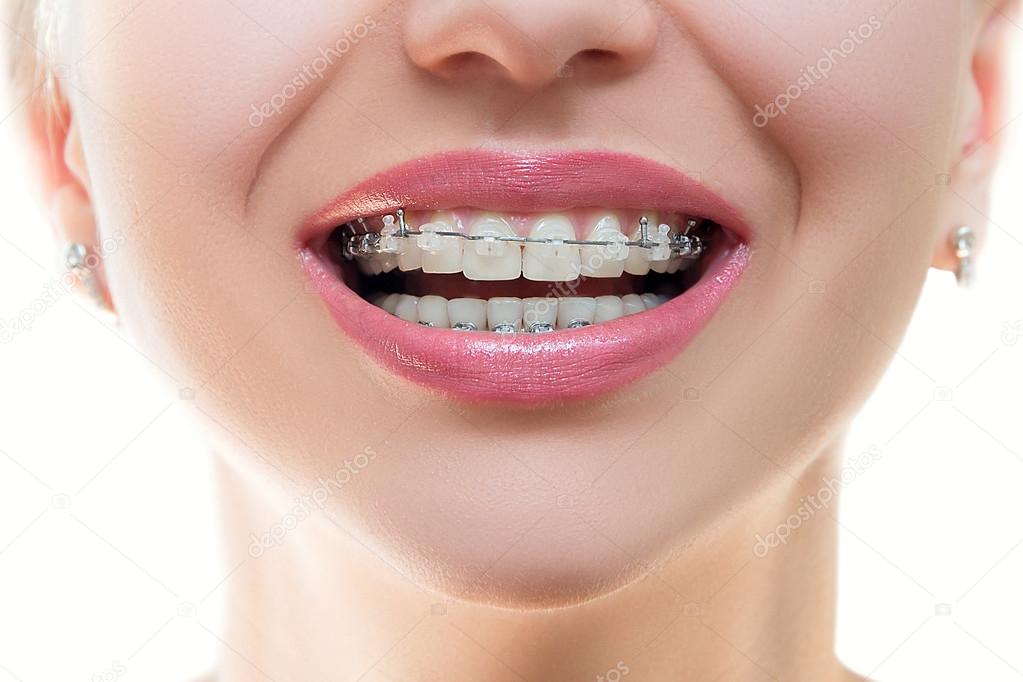
Traditional and fast braces are both great options for people considering teeth straightening. Depending on your smile and aesthetic goals, most of our braces patients complete their treatment anywhere between 6–12 months.
What are Fast Braces?
Accelerated orthodontics are braces designed for cosmetic teeth straightening. If you have a relatively aligned bite where your back teeth and jaws close together properly, we can focus the case on straightening the teeth at the front of your smile, which people see more often.
Fast braces aren’t suitable for everyone. Ideally, they’re best for mild misalignment like small gaps or limited crowding at the front of your mouth. If there’s more severe alignment issues, a specialist may need to intervene.
Advantages of Braces Over Aligners
Compared to Invisalign®, traditional braces are suitable for correcting more difficult issues, such as moderate crowding, gaps or crossbites. Since clear aligners are made of plastic, they only use minimal force compared to conventional bracket and wire systems.
Simply put, braces can move your teeth faster than removable clear aligners for some cases.
During your orthodontic assessment, we’ll analyse your bite, take a series of photos, X-rays and moulds of your mouth. At that time, we can let you know approximately how much treatment is needed in terms of time and costs involved.
We’ll need to see you once a month during your treatment to make adjustments to your orthodontic appliances and progress your tooth movement. Keeping your appointments and following your home care instructions will help you to see the best and quickest outcome.
Since fixed orthodontics are made up of a series of bonded brackets and wires, you’ll need to spend a little extra time cleaning around them at least twice per day. A special interproximal brush can help clean against the brackets (and under the wires), where plaque likes to build up the most.
Using an electric toothbrush can also be helpful. If flossing with a regular strand of floss and a threader proves challenging, consider investing in a water flosser instead.
It’s common to supplement with a fluoride rinse or gel during orthodontic treatment, especially if “white circles” or other areas of demineralisation are a concern.
Absolutely! Fast braces (accelerated orthodontics) are ideal for adults, because of the limited time commitment. Even though they’re visible, these systems can be completed in around six months, making it easy for any busy parent or professional to work a few visits into their self-care routine.
Adults make great candidates for braces, because they’re committed to following their home care instructions. You want the best outcome of anyone, so investing in your smile is never a bad decision. If you’re wondering if you’re too old to get braces, the answer is no! It’s not uncommon to start orthodontic therapy or go through re-treatment (from relapse) in your 40s, 50s or beyond.